
Pain Management for Cancer Patients
Dignity, Peace and Professional Support Within Palliative Care
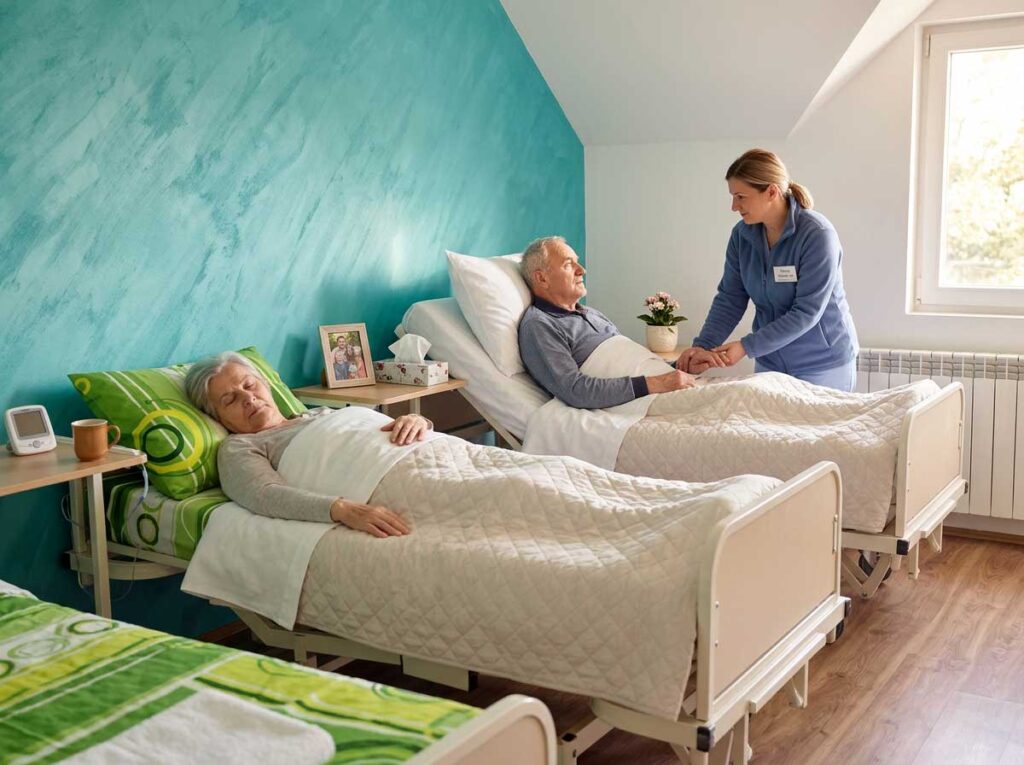
When a family is faced with an advanced or terminal stage of a loved one’s cancer, priorities change. The focus is no longer only on treating the underlying illness, but also on quality of life, pain relief, preserving dignity, and providing daily support to both the patient and the family.
For many families, the most difficult moment comes when home care is no longer enough. Medication that used to help may no longer have the same effect, pain may become more frequent or more intense, and family members may begin to wonder whether they are doing enough, whether they are administering therapy correctly and how they can best help the person they love.
In such situations, it is important to understand that the decision to arrange care in a nursing home does not mean giving up. On the contrary, it often represents a responsible step toward ensuring professional care, continuous supervision, and a calmer environment than the family, despite great love and effort, can provide at home.
At Vila Košuta, palliative care includes a careful, dignified and individual approach to each resident, with daily attention to pain, general condition, hygiene, nutrition, emotional safety and support for the family. You can read more about this service on the Palliative Care page.
What Is Pain Management for Cancer Patients?
Pain management for cancer patients includes monitoring, assessment, and the administration of prescribed therapy with the aim of relieving pain and enabling the patient to have as calm and comfortable a daily life as possible.
Cancer-related pain can vary in intensity and origin. Sometimes it is constant and dull, sometimes it appears in episodes, and sometimes it is connected with changes in position, movement, swallowing, breathing or other everyday activities. Some patients may also experience so-called breakthrough pain, meaning a sudden increase in pain despite regular therapy.
For this reason, pain management cannot be the same for every patient. It requires an individual approach, careful monitoring of the patient’s response to therapy, timely recognition of changes and cooperation with the family and the doctor who has prescribed the treatment.
As part of the services provided by Vila Košuta, special attention is given to residents who require continuous health support, assistance with daily functioning and careful monitoring of their general condition.
When Is Home Care No Longer Enough?
Families often try to organize care at home for as long as possible. This is natural and understandable. Home is a familiar environment, and family members want to remain close to the person they love. However, in advanced cancer, the patient’s needs may gradually become more complex.
Home care can become particularly demanding when:
- pain becomes frequent, intense, or unpredictable,
- therapy requires precise timing and monitoring of its effect,
- the patient becomes immobile or has great difficulty moving,
- nausea, constipation, loss of appetite, weakness, or confusion occur,
- the family is unsure how to respond in the event of sudden worsening,
- family members become physically and emotionally exhausted.
None of these signs means that the family is not dedicated enough. On the contrary, families who care the most are often the ones who find it hardest to admit that they need help. But when the patient’s general condition can no longer be safely monitored at home, professional support may be the best way to preserve the peace, dignity, and safety of the ill person.
Why Is Cancer Pain Different?
Cancer pain is often complex because it may have more than one cause. It can be the result of the disease itself, pressure on surrounding tissue, metastases, previous interventions, prolonged immobility or the general weakness of the body.
In addition to physical pain, patients often experience emotional distress. Fear, insomnia, a sense of loss of control, concern for the family and isolation can further intensify the experience of pain. That is why palliative care does not view pain only as a physical symptom, but as part of the person’s overall condition.
For this reason, it is important that the resident is not left only to occasional therapy, but has continuity of care, the presence of trained staff, and support that adapts to their condition.
How Does Vila Košuta Approach Pain Management?
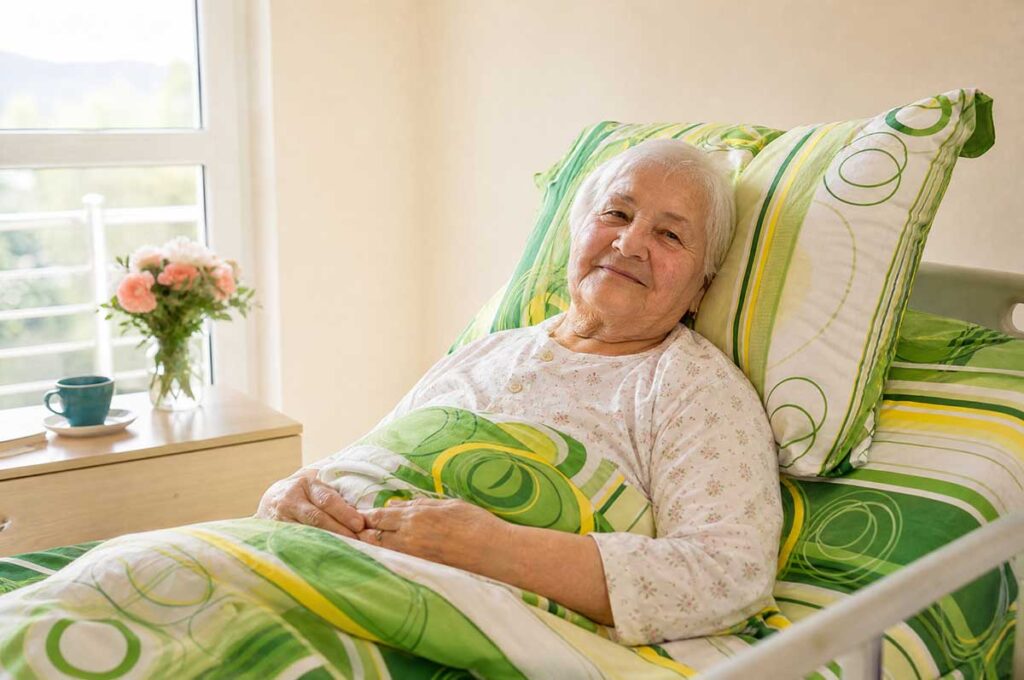
At Vila Košuta, pain management for cancer patients is carried out with respect for prescribed therapy and careful monitoring of the resident’s condition. Our aim is for the resident to be cared for, clean, calm, and supported, with a timely response to changes noticed by staff during the day or night.
- Continuous Monitoring of the Resident’s Condition
For residents who require palliative care, it is important that changes do not go unnoticed. Pain, restlessness, weakness, changes in breathing, refusal of food, drowsiness, confusion or difficulty moving may indicate that the patient’s condition requires attention or consultation with a doctor.
At Vila Košuta, residents have staff support throughout the day and night. This gives the family reassurance that the resident is not alone and that their condition is monitored continuously.
- Administration of Prescribed Therapy
Pain therapy is not determined arbitrarily. It is carried out according to the recommendation and instructions of the doctor, respecting the prescribed method of administration, dosage and timing.
The role of the home is to ensure that therapy is administered responsibly, regularly and with monitoring of the resident’s response. If a change in condition is noticed, the family is informed and, when necessary, consultation with the responsible doctor is organized.
- Recognition of Breakthrough Pain
Breakthrough pain is a sudden increase in pain that may occur even in patients who receive regular therapy. For families caring for a patient at home, this can be extremely stressful, especially at night or at moments when they are not sure what to do.
In the home, trained staff can recognize a change more quickly and initiate the appropriate procedure within their scope of responsibility: assessing the condition, informing the family, contacting the doctor and applying prescribed measures.
- Care for Side Effects of Therapy
Patients receiving stronger pain medication may experience accompanying difficulties such as nausea, constipation, drowsiness, reduced appetite or confusion. These symptoms should not be ignored, as they can significantly affect quality of life.
That is why palliative care does not only involve administering pain medication. It also includes monitoring the general condition, nutrition, digestion, hydration, hygiene, skin care and the psychological state of the resident.
Palliative Care Is Not Only Medical Therapy
When palliative care is discussed, families often first think of pain medication. Medication is an important part of care, but it is not the only one. Palliative care includes comprehensive support for the whole person.
At Vila Košuta, we pay special attention to ensuring that the resident is cared for, clean, calm and treated with dignity. For people who are immobile or have severe difficulty moving, daily hygiene, prevention of pressure sores, changing position and careful handling are of great importance.
For a person going through a serious illness, a sense of cleanliness, comfort, and respect can bring great relief. Sometimes this is just as important as medical therapy itself.
Hygiene and Prevention of Pressure Sores
Immobile cancer patients are at increased risk of pressure sores, skin irritation, infections and discomfort, which can further affect pain and overall condition. That is why regular hygiene is an important part of high-quality palliative care.
Our team takes care of personal hygiene, changing bed linen, keeping the space tidy, positioning the resident and maintaining everyday comfort. The goal is for the resident to be cared for in a way that preserves dignity and reduces additional discomfort.
Nutrition Adapted to the Resident’s Condition
Cancer patients often experience reduced appetite, difficulty swallowing, nausea, weakness or changes in taste. For this reason, nutrition must be adapted to the resident’s current condition.
At Vila Košuta, meals are taken care of so that they are easier to consume, nutritionally meaningful and aligned with the resident’s abilities. Sometimes smaller portions, more frequent and lighter meals, or meals that the resident can eat more easily are more appropriate.
Nutrition in palliative care is not only a matter of calories. It is part of support, attention and daily care.
Psychological Safety and the Presence of Staff
Cancer patients often face fear, insomnia, feelings of weakness and concern for their family. At such moments, the presence of a person who knows how to approach them calmly, listen and help without panic means a great deal.
Our staff work every day with elderly and ill residents, and understand how important patience, a calm tone, careful communication and human presence are.
Palliative care is not only a medical process. It is a relationship with a person during one of the most sensitive periods of life.
Support for the Family
Families caring for a cancer patient often find themselves between love, fear, guilt and exhaustion. Many feel that they must do everything alone, even when objectively they no longer can.
At Vila Košuta, we give families the opportunity to return from the role of an exhausted caregiver to the role of son, daughter, spouse or close person. This means that the family can spend time with the resident in conversation and peaceful presence, while the professional team takes care of daily care and medical support.
This change is important. When the family is no longer constantly burdened by fear of whether therapy has been given on time, whether the resident has been changed, whether something hurts or whether the condition will worsen during the night, the relationship with the ill person often becomes calmer and gentler.
Practical Support and Organization
Arranging care in a nursing home is not only a medical decision. It is also an organizationally demanding situation. Clothing, personal hygiene items, documentation, therapy, communication with doctors and regular visits all need to be arranged.
The location of Vila Košuta in Karaburma allows families from different parts of Belgrade relatively easy access, without the feeling that they are bringing a loved one far away. The proximity of larger roads, parking availability and nearby shops can also make everyday organization easier for the family.
This is not the most important part of palliative care, but in real life it means a great deal. When someone is already emotionally exhausted, every practical relief has value.
A Safe and Licensed Environment
When choosing a home for palliative care, families naturally want to know that the institution is safe, registered and organized. Vila Košuta is a licensed nursing home for elderly people and provides its services in accordance with professional standards.
On the About Us page, you can read more about the home, our approach to work, location and basic information about the institution.
For families who want to better understand the scope of services, we also recommend the Services page, where accommodation, health support, daily care, nutrition and additional services are presented in more detail.
How Much Does Palliative Care Cost?
The cost of accommodation and care depends on the resident’s condition, the level of support required, mobility, therapy, daily needs and type of accommodation. For cancer patients, it is particularly important that the condition is assessed carefully, as the needs may be more complex than for residents who require only basic support with daily functioning.
Basic information about prices can be found on the Pricing page, but for residents who require palliative care, we recommend a direct conversation with our team. This allows for a more realistic assessment of what level of support is needed and what form of care is most appropriate.
When Is the Right Time to Contact the Home?
Families often contact a nursing home only when they can no longer cope. This is understandable, but it is not always best for the patient. If pain is increasing, if home care has become too difficult, if the patient increasingly depends on the help of others, or if the family lives in constant fear of nights, deterioration and urgent situations, it is time for a conversation.
Getting in touch does not mean that you have to make a decision immediately. Sometimes the first step is simply a confidential conversation with the home’s team, an assessment of the situation and a better understanding of the options.
Families can contact us through the Contact page so that we can review the resident’s condition, care needs and accommodation options together.
Moving to a Nursing Home Can Be an Act of Care, Not Separation
One of the most difficult thoughts families face is the feeling that placing a loved one in a home means abandonment. In reality, in cases of severe illness and advanced condition, placement in a home often means exactly the opposite: a decision to provide professional support, a calmer environment and care that the family can no longer provide on its own.
When pain, weakness and the need for constant supervision become greater than the possibilities of home care, the most important question is no longer “Could we have done it ourselves?”, but “What is best for the person we love right now?”
At Vila Košuta, the family remains an important part of the resident’s life. Our aim is not to replace the family, but to help them be present in a gentler, calmer and less exhausting way.
Pain Management With Dignity and Care
Pain management for cancer patients requires knowledge, attention, patience and continuous monitoring. More importantly, it requires understanding that behind every diagnosis there is a person with their own habits, fears, wishes and need to be respected.
At Vila Košuta, palliative care includes medical support, daily care, hygiene, nutrition, emotional safety and cooperation with the family. Our goal is for the resident to have as much peace, comfort and dignity as possible, and for the family to know that they are not alone in this process.
If pain, weakness or the needs of your parent or family member exceed the possibilities of home care, you can contact us for a confidential conversation about palliative care and accommodation options.
Contact us and arrange a conversation with the Vila Košuta team.
Vila Košuta – professional care, a peaceful environment and support for families in the most sensitive moments.
Confidential conversation
Do you need support in organizing palliative care?
end us a message via WhatsApp or call us so we can discuss the resident’s condition, accommodation options and the type of support your family needs.
Message us on WhatsApp
Call us