
Prevention of falls in older adults
Falls in older adults are among the most common and most dangerous accidents in later life.
Statistics show that roughly one in three people over the age of 65 experiences at least one fall per year, and for those over 80, the risk rises to around 50 percent.
The consequences can be serious. From bruises and sprains to severe bone fractures and injuries that require long recovery periods.
Such injuries often lead to reduced mobility and independence and may even cause lasting health issues. This is why fall prevention in older adults is a key part of care, especially when the goal is to ensure safety in a care home and protect the elderly from injuries.
Below, you can learn more about the most common causes of falls in older age, which measures we can take to prevent them, as well as the professional care and empathy we provide at Vila Košuta.
Why are falls common among older adults?
As we age, the body goes through natural changes that can affect balance, mobility and stability. Because of this, older adults are more prone to losing balance and experiencing falls.
Here are the main reasons:
- Weak muscles and slowed reflexes – as the years go by, muscles lose strength and mass (sarcopenia). Reflexes become slower, making it harder for the body to react in time when balance is lost. This means that even a small stumble can lead to a fall.
- Balance problems – the function of the inner ear (the vestibular system) and the nervous system weakens over time. This makes it more difficult to maintain postural stability, so an older person can more easily lose balance while walking or when changing position suddenly.
- Chronic illnesses and conditions – diseases such as Parkinson’s disease, stroke, arthritis, diabetes, as well as Alzheimer’s disease and other forms of dementia, can significantly affect mobility, balance and spatial orientation. In addition, conditions like orthostatic hypotension (a sudden drop in blood pressure when standing up) may cause dizziness or fainting, further increasing the risk of falls in older adults.
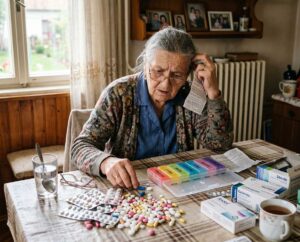
- Side effects of medication – older adults often take multiple medications at once (polypharmacy). Certain types of medication, such as sedatives, blood pressure reducers or those that affect sleep and mood, can cause drowsiness, dizziness or unsteadiness while walking. All of this increases the risk of falls in older adults.
- Weakened vision and hearing – with age, vision and hearing naturally decline. Poor vision makes it difficult to notice obstacles such as steps or thresholds, and reduced hearing may prevent a person from noticing a warning or a call for help. Together, these factors reduce the ability to move safely.
- Fear of falling (a psychological factor) – after experiencing a fall, many older adults develop a fear of falling again. Because of this fear, they often become less active, which further weakens their muscles and balance. In this way, the fear of falling creates a vicious cycle where reduced physical activity leads to higher insecurity, making new risks more likely.
All these changes mean that older adults need extra attention and support in their daily lives. Even simple activities, such as getting out of bed or going down the stairs, can become challenging without adequate help and supervision.

The most common causes of falls in older age
In addition to health related factors, many falls are caused by environmental conditions and the way daily activities are carried out.
A fall in older adults often occurs due to a combination of circumstances, and these are some of the most common causes:
- Slippery and uneven surfaces, obstacles in the environment – a cluttered or poorly adapted living space is a common cause of falls. Rugs that are not firmly fixed, or have curled edges, slippery floors such as spilled water or wet tiles, cables stretched across the floor and high thresholds can all lead to tripping.
- Poor lighting – the safety of older adults at home depends greatly on good visibility. Dark hallways, staircases without enough light and rooms with weak lighting make it difficult for older people to see where they are going. Falls often happen at night on the way to the bathroom if there are no night lamps or motion sensors. Good lighting in every part of the home is one of the basic measures for preventing falls.
- Lack of handrails and mobility aids – in homes without adapted conditions, the absence of handrails in the bathroom or on staircases means that older adults do not have sufficient support. Slippery showers without grab bars, or a toilet without additional support, present a serious risk. If a person has difficulty walking and does not use a mobility aid such as a cane or walker, the risk of losing balance increases.
- Inappropriate footwear – shoes that do not support the ankle properly or have slippery soles can cause slipping. Loose slippers, as well as walking in socks on parquet or tiles, are also common causes of falls. Stable and comfortable shoes with rubber soles significantly reduce the risk.
- Overestimating one’s own abilities and lack of caution – although it is important for older adults to stay active, they may sometimes try to perform tasks that are unsafe for their condition. Climbing on chairs or ladders, carrying heavy items and standing up too quickly can all lead to falls. Older adults should move calmly, use assistance when needed and respect their own limits.
How to prevent falls in the Vila Košuta care home?
Many people wonder how to prevent falls among older adults, considering all the risks that come with ageing.
Our experience shows that the best results are achieved when professional care, constant supervision and a carefully adapted environment are combined.
At the Vila Košuta care home we apply a range of measures that ensure maximum safety and protection of older residents from falls.
How to reduce the risk of falls at home?
- installing handrails along corridors, stairs and in bathrooms
- adequate lighting in all rooms, including night lights
- removing slippery rugs and ensuring non slip flooring
- regular cleaning and removing spilled liquids
- an ergonomic furniture layout that allows safe and easy movement
A safe and adapted environment in the Vila Košuta care home means that every part of the space is tailored to the individual needs of each resident. Rooms, hallways and bathrooms are equipped with handrails, non slip floor coverings and stable furniture that make standing up and moving around easier.
Professional supervision and staff support play a crucial role in preventing falls among older adults. Our trained team is present throughout the day, helping residents with standing up, walking and everyday activities. If someone has a higher risk of falling (due to weakness, dementia or injury), we provide increased supervision and constant assistance, which helps prevent accidents and ensures a sense of security and peace.
Physical activity and fall prevention are key to maintaining stability and confidence in older adults. At Vila Košuta we make an effort to encourage residents to take part in light exercises, recreational activities and walks, in line with their abilities and health condition. Our physiotherapists, when needed, carry out individual exercise programmes to strengthen muscles and aid recovery after illness or surgery, contributing to better mobility and safety for every resident.
Health monitoring and therapy are part of our preventive measures that directly help reduce the risk of falls in older adults. We regularly check blood pressure, blood sugar levels and other parameters that may affect stability. We pay special attention to prescribed therapies that may cause drowsiness or dizziness, and we adjust them in cooperation with doctors to protect the health and safety of our residents.
Education and awareness about fall risks are just as important as physical protection. At Vila Košuta we regularly organise internal training sessions for carers and staff, as well as counselling for residents and their families. We encourage older adults to move carefully, use mobility aids and call the staff whenever they need help. We give families advice on how to ensure the safety of older adults at home during visits or weekends, because fall prevention in older adults requires shared care and attention.
The importance of quick response and professional care
Despite all precautions, falls can still happen. This is why quick response and professional care are essential to prevent complications.
At Vila Košuta every incident is taken seriously, and the staff are trained to immediately assess the resident’s condition, provide first aid and, if needed, call a doctor or emergency services. Through timely action we prevent injuries and consequences that may occur if a person remains on the floor after a fall.
After an incident we provide comprehensive carer and medical support throughout the recovery. In cases of serious injuries such as fractures we arrange physiotherapy, pain management and constant supervision. Our physiotherapists and carers help residents safely regain mobility and independence. You can read more about this in our blogs on hip fracture in older adults and shoulder fracture in the elderly.
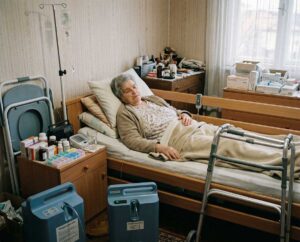
In situations where recovery is long term we apply palliative care to ensure residents have maximum comfort, professional support and emotional care. This approach helps each resident recover in a safe, calm and compassionate environment.
Why is resident safety our priority at Vila Košuta?
In the Vila Košuta care home, resident safety is not just an obligation, but a way of caring.
Our goal is to ensure that later life feels safe and filled with attention. Through continuous supervision and a carefully adapted environment we create a home where risks are minimal and comfort and security are maximised.
Families can have peace of mind knowing that their loved ones are surrounded with professionalism, warmth and care.
Contact us today. We will be happy to answer any questions, provide all the necessary information and help you find the best solution for the care of your loved one.